Korean Bibimbap
Highlighted under: World Inspiration
Korean Bibimbap is a vibrant and flavorful dish that combines rice, sautéed vegetables, and a variety of toppings for a nutritious meal.
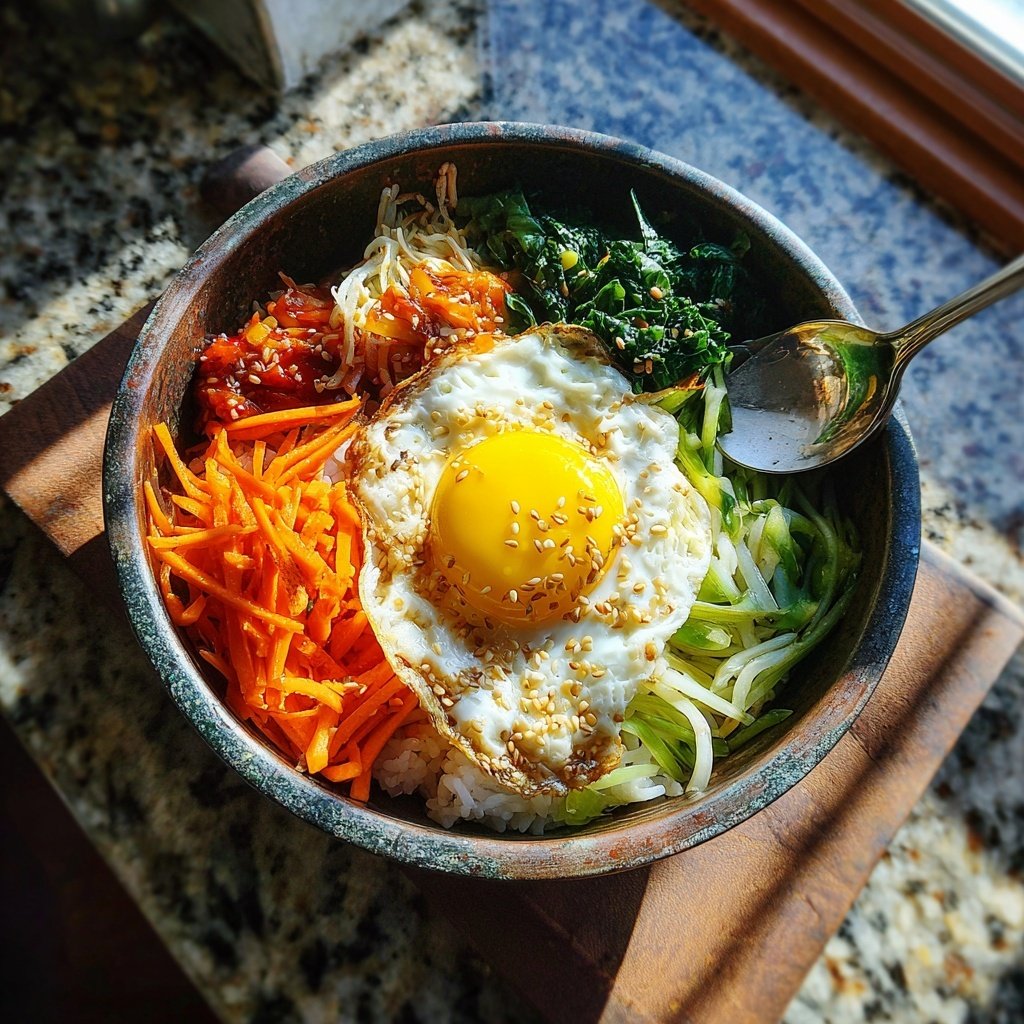
Korean Bibimbap is not only delicious but also a feast for the eyes. This dish showcases the beauty of Korean cuisine with its colorful array of vegetables and rich flavors.
Why You'll Love This Bibimbap
- A delightful mix of textures and flavors
- Customizable with your favorite proteins and veggies
- Packed with nutrients for a wholesome meal
A Colorful Array of Ingredients
Korean Bibimbap is not just a meal; it's a feast for the eyes and the palate. The vibrant colors of fresh vegetables and proteins make it a visually appealing dish. The combination of blanched spinach, crisp bean sprouts, and colorful carrots and zucchini creates a rainbow of flavors that dance together in harmony. This is a dish that encourages you to eat with your eyes first, making it a delightful addition to any dining table.
The variety of ingredients in Bibimbap allows for endless customization. Whether you prefer tofu for a vegetarian option, marinated beef for a traditional taste, or even chicken, you can easily adapt this recipe to suit your dietary preferences. This flexibility not only makes it easy to prepare but also ensures that every bite can be tailored to your liking.
Health Benefits of Bibimbap
Bibimbap is a wholesome dish packed with nutrients. The base of white rice provides a good source of carbohydrates, while the vegetables contribute essential vitamins and minerals. Spinach, for example, is rich in iron and antioxidants, making it a powerhouse of nutrients that support your overall health. Bean sprouts are low in calories and high in fiber, making them an excellent choice for maintaining a healthy weight.
Including a variety of vegetables not only enhances the nutritional profile but also provides a range of flavors and textures. This balance of nutrients is especially beneficial for those looking to maintain a healthy lifestyle, as it encourages a colorful plate filled with different food groups. Eating a diverse range of foods ensures that your body receives the nutrients it needs to function optimally.
The Perfect Meal for Any Occasion
Korean Bibimbap is incredibly versatile and can be enjoyed at any time of the day. Whether it's a hearty breakfast to kickstart your day, a satisfying lunch to keep you energized, or a comforting dinner to wind down, Bibimbap fits the bill perfectly. Its quick preparation makes it an ideal choice for busy weeknights or casual get-togethers with friends and family.
Moreover, Bibimbap can be served in individual bowls, making it a fun and interactive meal for gatherings. Guests can mix their Bibimbap to their taste, adding the perfect amount of gochujang and soy sauce to create their unique flavor profile. This interactive element not only enhances the dining experience but also fosters a sense of community around the table.
Ingredients
For the Bibimbap
- 2 cups cooked white rice
- 1 cup spinach, blanched
- 1 cup bean sprouts, blanched
- 1 carrot, julienned
- 1 zucchini, julienned
- 4 shiitake mushrooms, sliced
- 2 eggs
- 2 tablespoons sesame oil
- Soy sauce to taste
- Gochujang (Korean chili paste) to taste
- Sesame seeds for garnish
Feel free to add your favorite protein like beef, chicken, or tofu for a heartier meal.
Instructions
Prepare the Vegetables
In a pan, heat 1 tablespoon of sesame oil over medium heat. Sauté the carrot and zucchini for about 3-4 minutes until slightly tender. Add the shiitake mushrooms and cook for an additional 2 minutes. Set aside.
Cook the Eggs
In the same pan, add a little more sesame oil and fry the eggs sunny-side up, or to your liking.
Assemble the Bibimbap
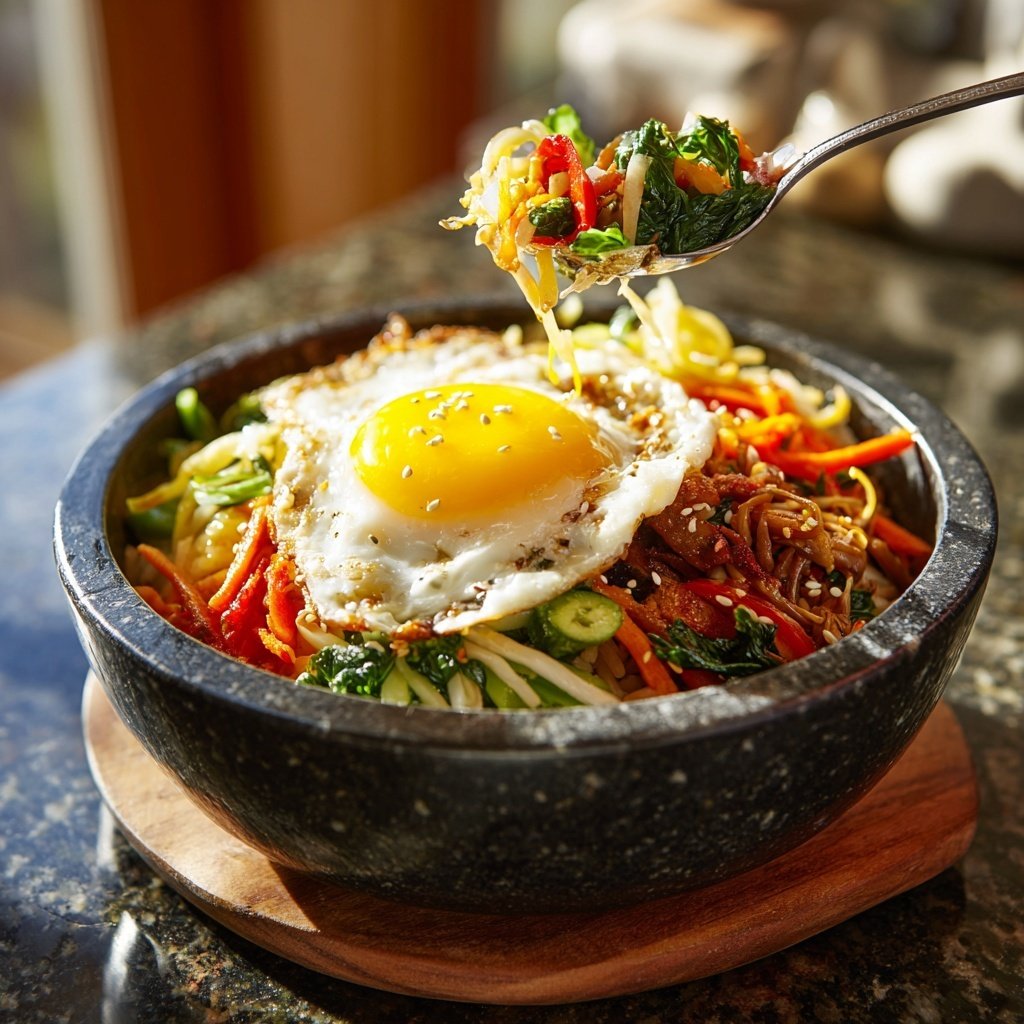
In a large bowl, place the cooked rice at the bottom. Arrange the sautéed vegetables, spinach, and bean sprouts on top. Place the fried egg in the center.
Add Sauce and Serve
Drizzle with soy sauce and gochujang to taste. Sprinkle sesame seeds on top, mix well before enjoying!
Enjoy your homemade Korean Bibimbap warm for the best experience!
Pro Tips
- Feel free to customize the toppings based on your preferences and what's in season. It's a great way to use up leftover vegetables.
Tips for Perfecting Your Bibimbap
To achieve the perfect texture in your Bibimbap, make sure to cook each vegetable separately. This allows them to retain their unique flavors and crunch. Blanching the spinach and bean sprouts ensures they stay vibrant and fresh, while sautéing the carrots and zucchini enhances their natural sweetness. Taking the time to prepare each component properly will elevate your dish significantly.
When it comes to the fried egg, consider cooking it sunny-side up for that beautiful runny yolk that adds creaminess to your dish. If you prefer a firmer texture, feel free to cook the egg to your liking. The egg not only adds flavor but also enriches the overall experience, tying all the components together in a delicious medley.
Pairing Suggestions
Bibimbap can be enjoyed on its own, but pairing it with traditional Korean sides can elevate your meal. Consider serving it alongside kimchi for a spicy, tangy contrast or pickled vegetables for an added crunch. These sides complement the main dish beautifully and introduce more layers of flavor to your dining experience.
If you’re looking for beverage pairings, a light and refreshing Korean rice wine, such as makgeolli, can enhance the flavors of Bibimbap. Alternatively, a chilled green tea or a fruity soju cocktail can also be delightful companions, balancing the dish's richness with their crispness.
Questions About Recipes
→ Can I make Bibimbap vegetarian?
Absolutely! Just omit the meat and add more vegetables or tofu for protein.
→ What can I substitute for gochujang?
You can use sriracha or any other spicy chili paste, but it may alter the flavor slightly.
→ Is Bibimbap gluten-free?
Yes, if you use gluten-free soy sauce and ensure all ingredients are gluten-free.
→ Can I prepare Bibimbap in advance?
You can prepare the vegetables and rice ahead of time, but it's best to assemble and serve it fresh.
Korean Bibimbap
Created by: Isadora Pembroke
Recipe Type: World Inspiration
Skill Level: Intermediate
Final Quantity: 4 servings
What You'll Need
For the Bibimbap
- 2 cups cooked white rice
- 1 cup spinach, blanched
- 1 cup bean sprouts, blanched
- 1 carrot, julienned
- 1 zucchini, julienned
- 4 shiitake mushrooms, sliced
- 2 eggs
- 2 tablespoons sesame oil
- Soy sauce to taste
- Gochujang (Korean chili paste) to taste
- Sesame seeds for garnish
How-To Steps
In a pan, heat 1 tablespoon of sesame oil over medium heat. Sauté the carrot and zucchini for about 3-4 minutes until slightly tender. Add the shiitake mushrooms and cook for an additional 2 minutes. Set aside.
In the same pan, add a little more sesame oil and fry the eggs sunny-side up, or to your liking.
In a large bowl, place the cooked rice at the bottom. Arrange the sautéed vegetables, spinach, and bean sprouts on top. Place the fried egg in the center.
Drizzle with soy sauce and gochujang to taste. Sprinkle sesame seeds on top, mix well before enjoying!
Extra Tips
- Feel free to customize the toppings based on your preferences and what's in season. It's a great way to use up leftover vegetables.
Nutritional Breakdown (Per Serving)
- Calories: 500 kcal
- Total Fat: 20g
- Saturated Fat: 4g
- Cholesterol: 186mg
- Sodium: 600mg
- Total Carbohydrates: 72g
- Dietary Fiber: 5g
- Sugars: 5g
- Protein: 15g